
OceanX Sixgill Shark FAQ
This OceanX sixgill shark FAQ answers the questions that come up most often when the video is shared. The dates and figures below come from mission records, the craft’s manufacturer and dated coverage.
Updated
How to read the footage and its dates
The date of the dive, the date of a social upload and the date of a news report are separate timestamps. Use the museum’s dive account for the first, the platform post for the second, and the original article for the third.
The expedition also recorded two different animals. The large female approached the window. The male was tagged. The shorthand used in a clip caption can blur that detail, so the mission account is the best place to check which event a claim describes.
Questions about the video and dive
Which OceanX submersible is in the shark footage?
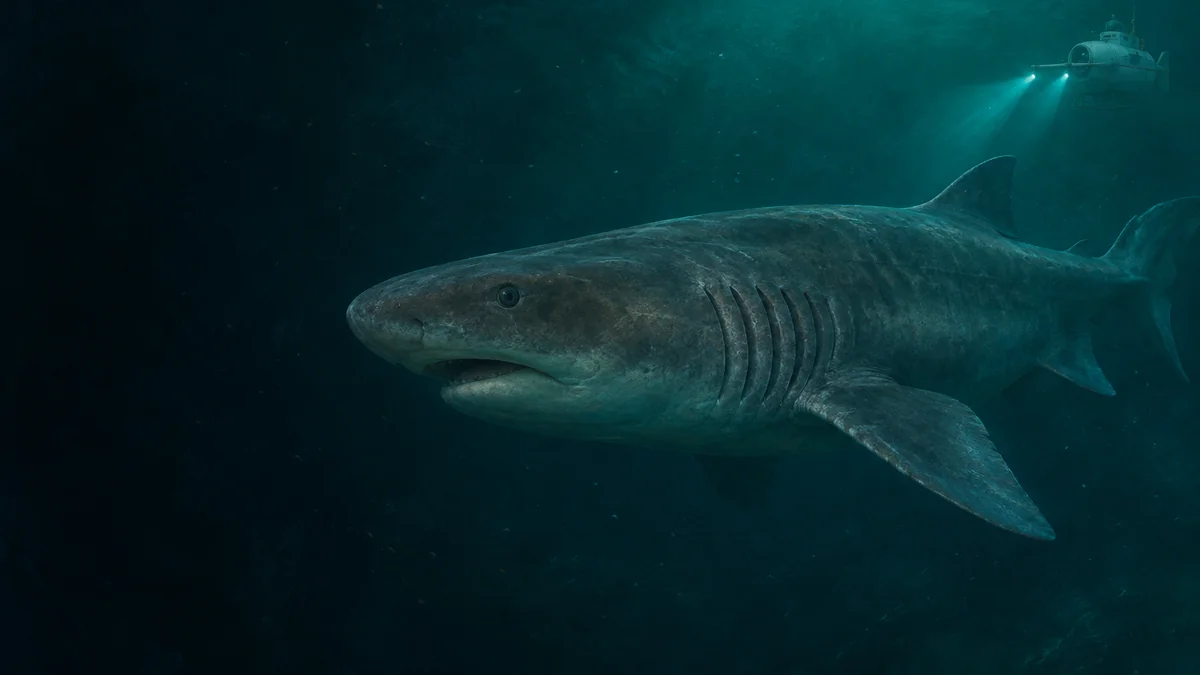
The submersible was Nadir, a Triton 3300/3 operated from Alucia. The model carries a pilot and two passengers. Triton lists a depth rating of 1,000 meters.
When and where was the OceanX shark video filmed?
The encounter dates to June 2019 off Eleuthera in the Bahamas, in Exuma Sound. The Florida Museum records a June 29 dive. OceanX’s 2019 mission account predates the November 2026 coverage by more than seven years.
How big was the shark by the viewing window?
The Florida Museum described a female of about 16 feet, or 4.9 meters. The November 2026 OutKick story reported 16 to 17 feet, or roughly 4.9 to 5.2 meters. Those figures are estimates.
How deep did the team see sixgill sharks?
The museum puts the successful satellite tagging at more than 1,700 feet, a little over 518 meters. The record supports that depth for the tagged male. It does not supply a separate depth reading from each shot of the female.
Did the researchers tag the female in the video?
The Florida Museum describes two animals in its account. The female inspected the window. A male received the satellite tag on the successful dive. Her close pass and his tag are separate observations.
Why was the video in the news again in 2026?
OutKick covered the recirculating clip on November 22, 2026. The article explicitly dated the encounter to 2019. The original mission records and an OceanX excerpt from 2023 show that the footage was public years before the renewed coverage.
Where can I watch the original OceanX footage?
The Florida Museum links to the OceanX Facebook post in its July 2019 account. The video archive on this site lists that link next to the official five-second TikTok excerpt and explains how to tell those versions apart.
How can I recognize a bluntnose sixgill shark?
Look for six gill slits on each side, a broad blunt head and one dorsal fin far back on the body. The eyes may look green in life or reflect the submersible’s lights. In a cropped clip, the expedition report is a better identifier than eye color alone.
Sources
- Florida Museum — Florida scientists tag deep-sea shark from submersibleJuly 2019 account with participant interviews, the 2019 dive record and a link to OceanX footage.
- OceanX — We Tagged a Bluntnose Sixgill Shark (Finally!)July 1, 2019 mission account covering earlier attempts, the Bahamas team and the successful tag.
- OceanX on Facebook — footage of the diveThe OceanX post linked directly from the Florida Museum's 2019 expedition account.
- OceanX on TikTok — sixgill shark at the submersible windowA five-second excerpt published by OceanX on February 24, 2023.
- OutKick on Fox News — Massive 17-foot shark comes face-to-face with scientistsNovember 22, 2026 coverage documenting renewed circulation and the later headline estimate.
- Triton Submarines — Nadir and the Triton 3300/3 in Blue Planet IIManufacturer background on the original 3300/3 model, Nadir and its use aboard Alucia.
- Florida Museum — Bluntnose Sixgill Shark (Hexanchus griseus)Species reference for field marks, habitat, geographic distribution, behavior and size context.